The last post identified potential transition pathways for truck drivers based on how closely other occupations matched them on skills, abilities and knowledge. This post follows the same basic approach across a wider range of occupations and asks whether two proxies could stand in for the ratings where no O*...
This post is a follow-up to my previous posts on semi-parametric option pricing. A link to the study (accepted for presentation at the osQF 2026 conference) is provided at the end of this post.
Today’s just a very short sequel to last week’s post, where I had a look at some very skewed distributions to test the idea that sample sizes sometimes need to be in the tens of thousands for the sample mean to have a normal distribution. Turns out the...
You can read the original post in its original format on Rtask website by ThinkR here: From URL to Theme: How {css2r} Steals a Website’s Colours, and Where It Gives Up
You have thirty minutes before the demo, and your Shiny app still looks like Bootstrap 5 out of ...
Two small R packages of mine have gone to CRAN. coinclp binds the COIN-OR Clp linear programming solver and was accepted on […]
The post coinclp: the COIN-OR Clp linear programming solver is back on CRAN appeared first on Sam Lovick Consulting. [Read more...]
There is a quote I really love from Marc Kéry’s book, “Introduction to WinBUGS for Ecologists” (2010, p. 11):
“WinBUGS helps free the modeler in you.”
And it’s so true! Once you deeply understand a statistical model in all its moving part...
Frank Harrell made this enlightening comment on BlueSky the other day:
“At the heart of the failure of the CLT (central limit theorem) is its need for the mean and standard deviation to be independent. With asymmetric distributions they are far fr...
Run Grubbs' test in R with grubbs.test() from the outliers package. Verified mtcars example with real G, U, and p-value output, plus when the test applies and what to do after it flags a value.
Read More » [Read more...]
What? People would fund me and mentor me building my own R package?
My first time hearing about rOpenSci was, interestingly, at a bird conference. At an ornithological conference in 2023, I was chatting with my bird friend / colleague Steffi LaZerte,... [Read more...]
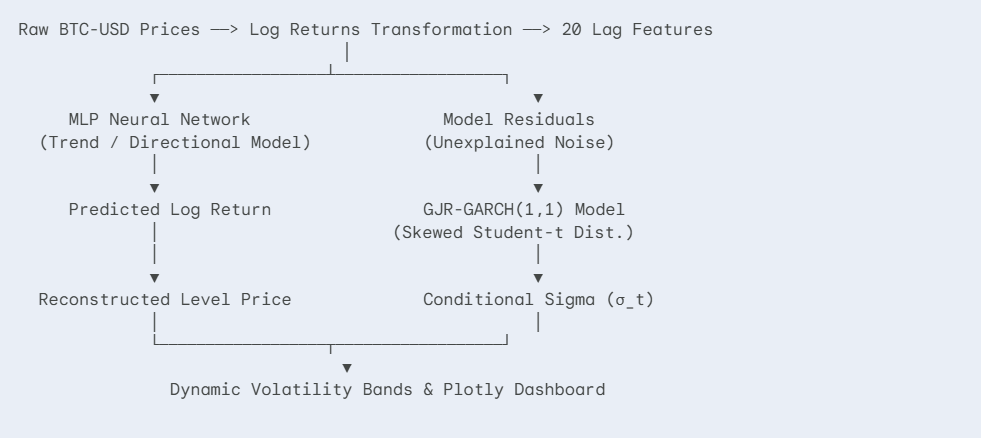
Point predictions tell you what a model *thinks* will happen. They don't tell you how much to trust that number. nnetsauce's `QuantileRegressor` takes any sklearn-compatible regressor and turns it into a full quantile machine by optimizing an offset around its point predictions to minimize the pinball (quantile) loss.
If you've written the same block of R code three times this week — a group summary, a plot, a cleanup step — you don't need another package. You need a function. A custom function is the solution. For example, two functions you'll actually reuse: a cus...
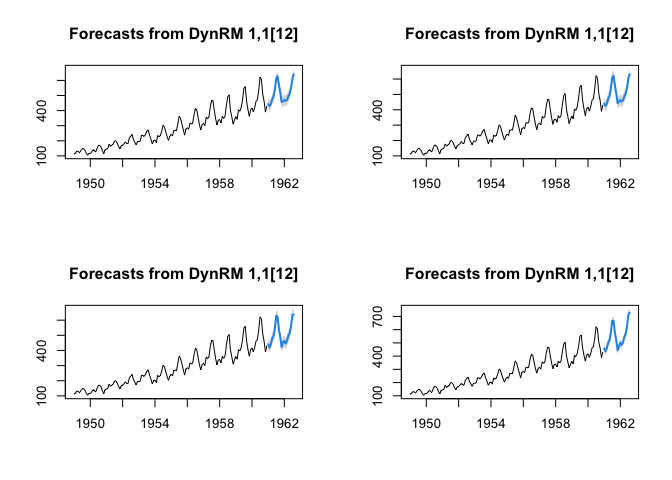
ahead (R) 0.38.1 and its Python wrapper now install in a fraction of the time, by moving almost every heavy modeling dependency from Imports to Suggests and installing them at runtime, only when a function actually needs them.
Spatial machine learning has become a standard tool for producing environmental and geographic prediction maps. It is now relatively (technically) easy to combine field observations with remote sensing, climate, terrain, or other predictor layer...